"I do everything around here"
Here's your step-by-step plan to share the mental load and create true partnership
A Why this is happening
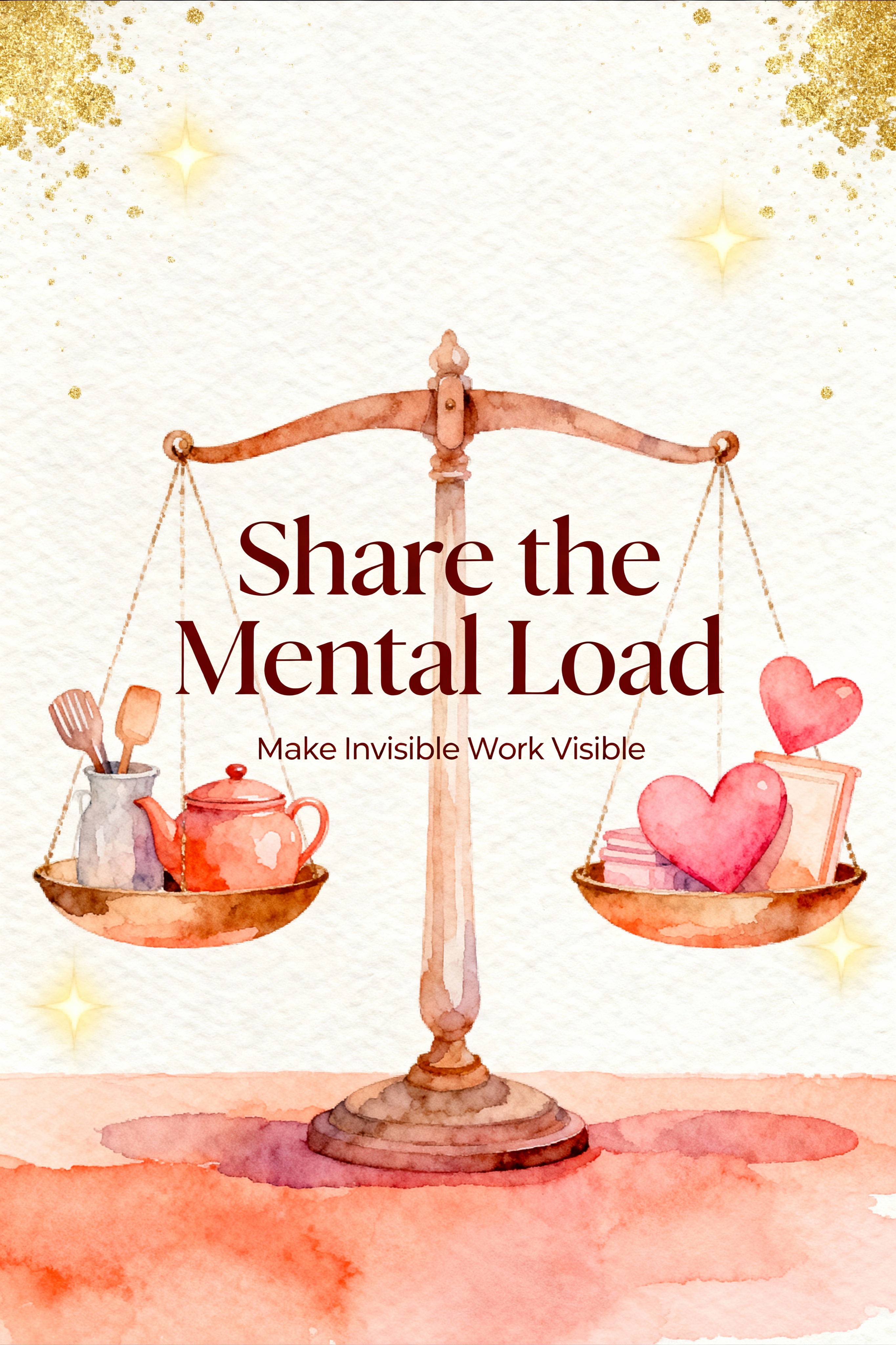
The mental load isn't about who does the dishes. It's about who remembers that the dish soap is running low, adds it to the list, and makes sure it gets bought.
There's visible work (cooking, cleaning) and invisible work (remembering the dentist appointment, knowing when groceries run out, planning birthday parties). This "mental load" often falls on one person.
One partner becomes the household "project manager" - tracking appointments, anticipating needs, coordinating schedules, remembering birthdays. This invisible cognitive labor is exhausting because it never stops, even during "relaxation" time.
The other partner may genuinely not see it. When you say "You never help," they think "I do plenty!" because they don't count the invisible work. The fix: Make the invisible visible. Then redistribute fairly.

B Do this today
Make the Invisible Visible
Step 1: Sit down with your partner. Get paper or open a notes app.
Step 2: Write down EVERY task that keeps your household running - not just what you do, but everything you hold in your head. Include invisible work like "Notice when we're out of toilet paper," "Remember kids' friends' names," and "Plan what's for dinner."
Step 3: Next to each task, write who currently does it.
Step 4: Look at the list together. Don't argue yet - just look. Share it not as an accusation, but as data: "I realized I'm carrying a lot of invisible work. Can we look at this together?"
Why this matters: This creates undeniable visual proof of the imbalance. Your partner may genuinely not see the invisible work - making it visible is the first step to sharing it.
C This week's practice: Complete Task Ownership
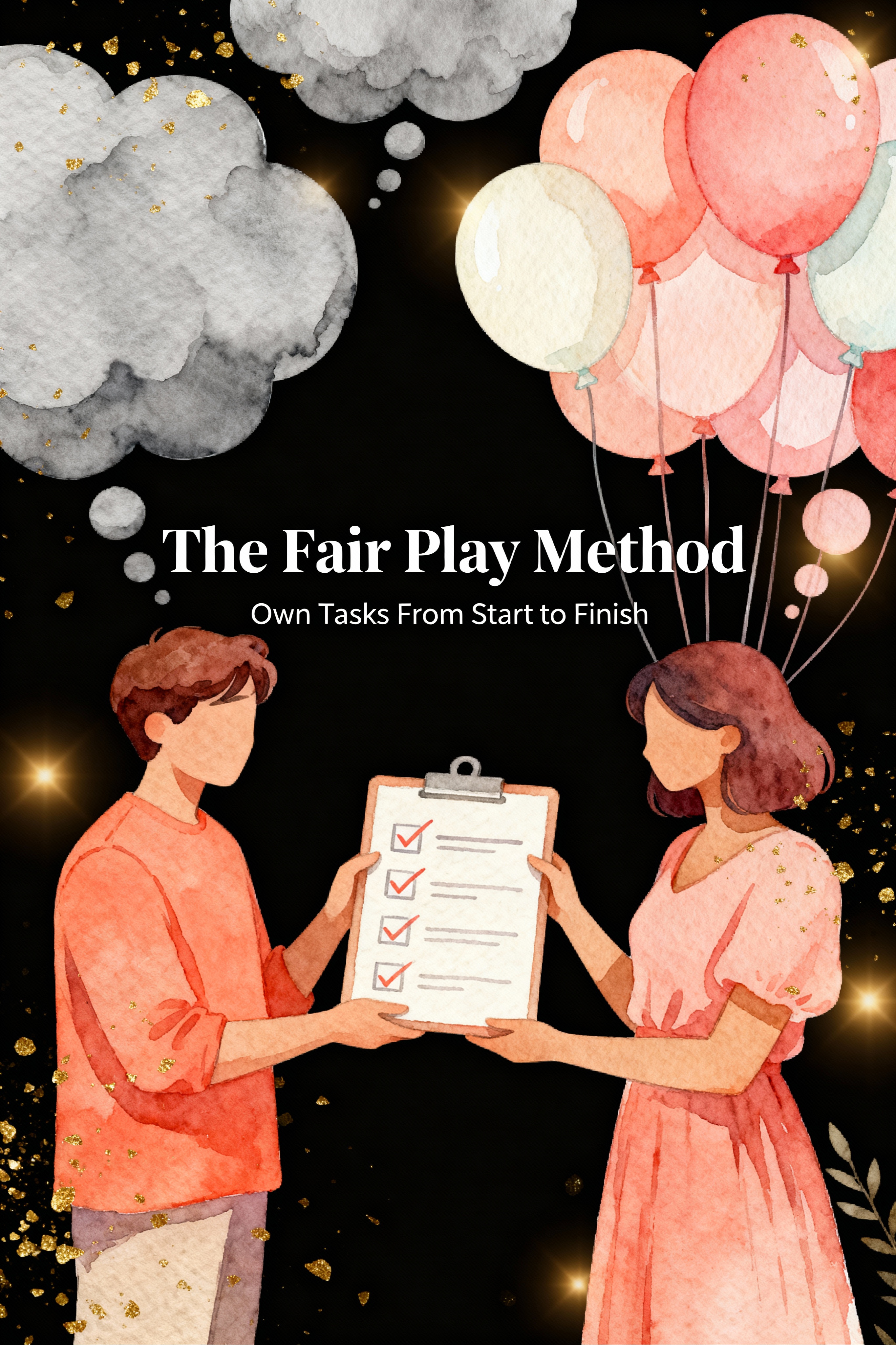
Instead of "helping" with tasks, each partner takes complete ownership of specific domains. When you take a task, you own ALL of it:
1. Conception
Noticing it needs to be done. (The garbage is full. We're almost out of milk.)
2. Planning
Figuring out how and when. (It's trash day tomorrow, I need to take it out tonight.)
3. Execution
Actually doing it. (Taking out the garbage. Buying the groceries.)
4. Divide by domains, not tasks
List all household domains: Meals, groceries, kids' schedules, finances, home maintenance, social calendar, medical appointments, pet care, etc. Each person takes full responsibility for their domains. Define what "done" looks like so both partners have clear expectations.
D Tools that help
Fair Play by Eve Rodsky (Book + Card Deck)
A complete system for dividing household labor. The 100-card deck represents household tasks - deal them based on who does what now. The visual pile difference is powerful. Then redistribute. Each partner owns complete tasks from conception to execution - no "helping" allowed.
Shared Digital Calendar
Google Calendar, Apple Calendar, or Cozi. Both partners add items directly and check it daily. No relying on the other person to remember.
Weekly Planning Meeting
15-30 minutes weekly to review the coming week, discuss upcoming needs, and adjust task ownership. Keep it businesslike. Prevents issues from festering.
OurHome or Cozi Apps
Shared task lists, shopping lists, and family calendars. Makes household management visible and trackable for both partners.
If your partner refuses to look at the list or dismisses your experience: That's a bigger issue than chores. It may indicate a lack of respect. Consider whether the relationship has fundamental respect problems.
What's next?
Make the task list together and try complete task ownership for two weeks. If your partner resists or resentment persists even after fair division, you might also be dealing with:
Save These Tips
Relationships Need Ongoing Care
Reading this guide is a great first step. But relationship patterns don't change overnight. Without consistent practice, old habits creep back.
We've built a free tool to help you stay on track: regular tips and reminders delivered to your inbox, tailored to your situation, at your pace. Think of it as a gentle nudge to keep nurturing your connection.
Get Free Relationship Tips100% free. No spam. Unsubscribe anytime.