A Why this is happening
When your heart rate goes above 100 bpm during an argument, your brain enters "fight or flight" mode. You literally can't hear your partner properly anymore - your brain treats them like a threat.
This is called "flooding." It's biology, not a character flaw. The solution is to prevent flooding and learn how to talk so both people feel heard.
B Do this today
Agree on a "timeout" signal
Step 1: Tell your partner: "I want us to try something. When things get heated, either of us can say 'I need a break' - and we both agree to stop for 20 minutes."
Step 2: During the 20 minutes, do something calming (walk, read, breathe). Don't rehearse arguments in your head.
Step 3: After 20 minutes, come back and try again, starting with "What I was trying to say is..."
💡 Why 20 minutes? That's the minimum time for your nervous system to calm down from flooding.
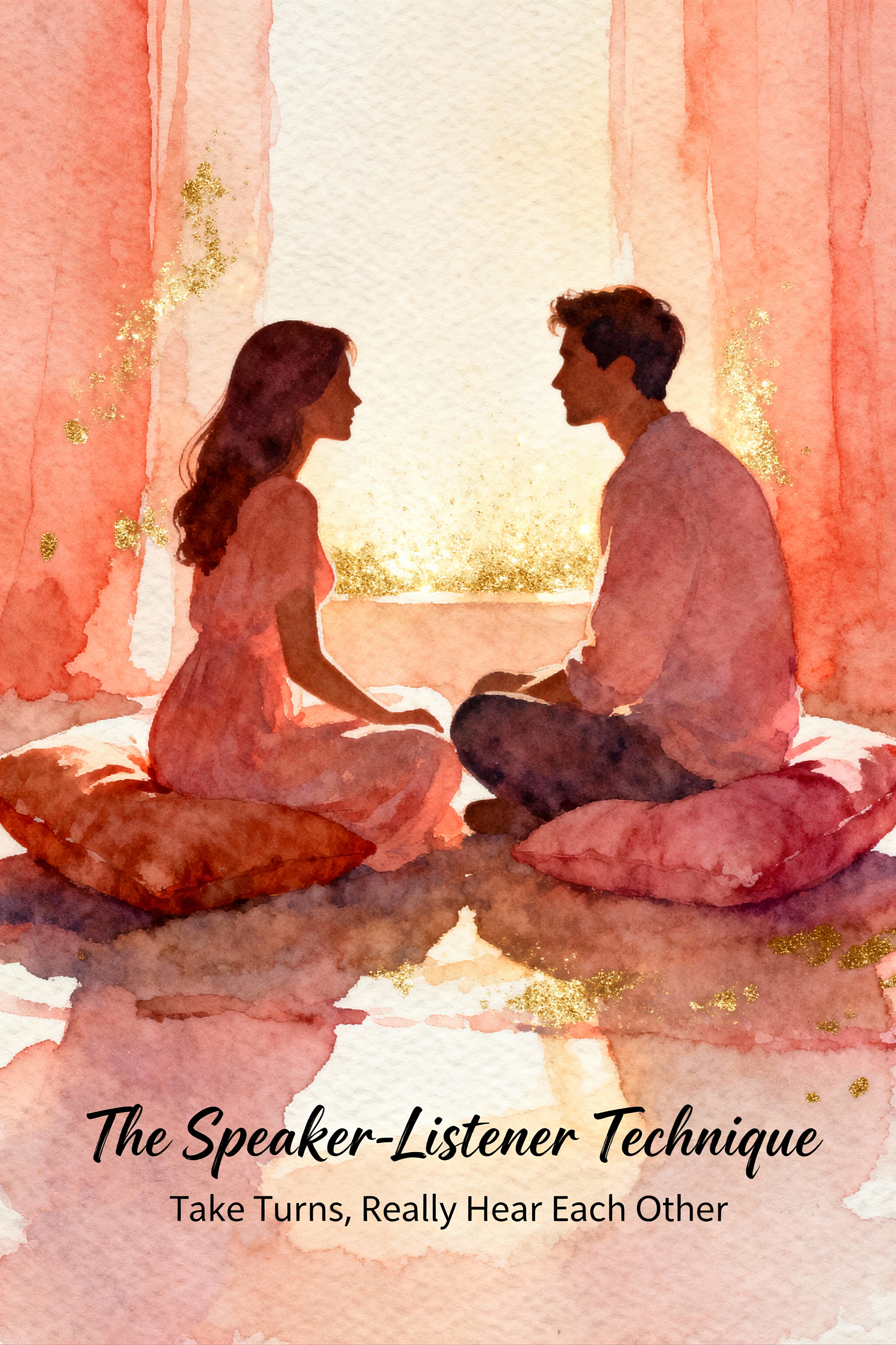
C This week's practice: The Speaker-Listener Technique
Use this structure for difficult conversations:
1. Speaker talks in "I feel" statements
"I feel hurt when I come home and you're on your phone, because I miss connecting with you."
2. Listener repeats back what they heard
"What I'm hearing is that you feel hurt when I'm on my phone when you get home, because you want to connect. Did I get that right?"
3. Speaker confirms or clarifies
"Yes, exactly." or "Almost - it's more about..."
4. Switch roles
The listener now becomes the speaker.
D Tools that help
Gottman Card Decks (App)
Free app with conversation starters. Use the "Open-Ended Questions" deck to practice talking about non-conflict topics.
Codenames Duet (Board Game)
A cooperative word game that trains you to think from your partner's perspective. Low-stakes practice for understanding each other.
"Hold Me Tight" by Sue Johnson
Book that explains why couples get stuck in communication loops and how to break free.
What's next?
Practice the timeout signal and speaker-listener technique for one week. If things improve, great! If you're still stuck, you might also be dealing with one of these:
Save These Tips
Relationships Need Ongoing Care
Reading this guide is a great first step. But relationship patterns don't change overnight. Without consistent practice, old habits creep back.
We've built a free tool to help you stay on track: regular tips and reminders delivered to your inbox, tailored to your situation, at your pace. Think of it as a gentle nudge to keep nurturing your connection.
Get Free Relationship Tips100% free. No spam. Unsubscribe anytime.