A Why this is happening
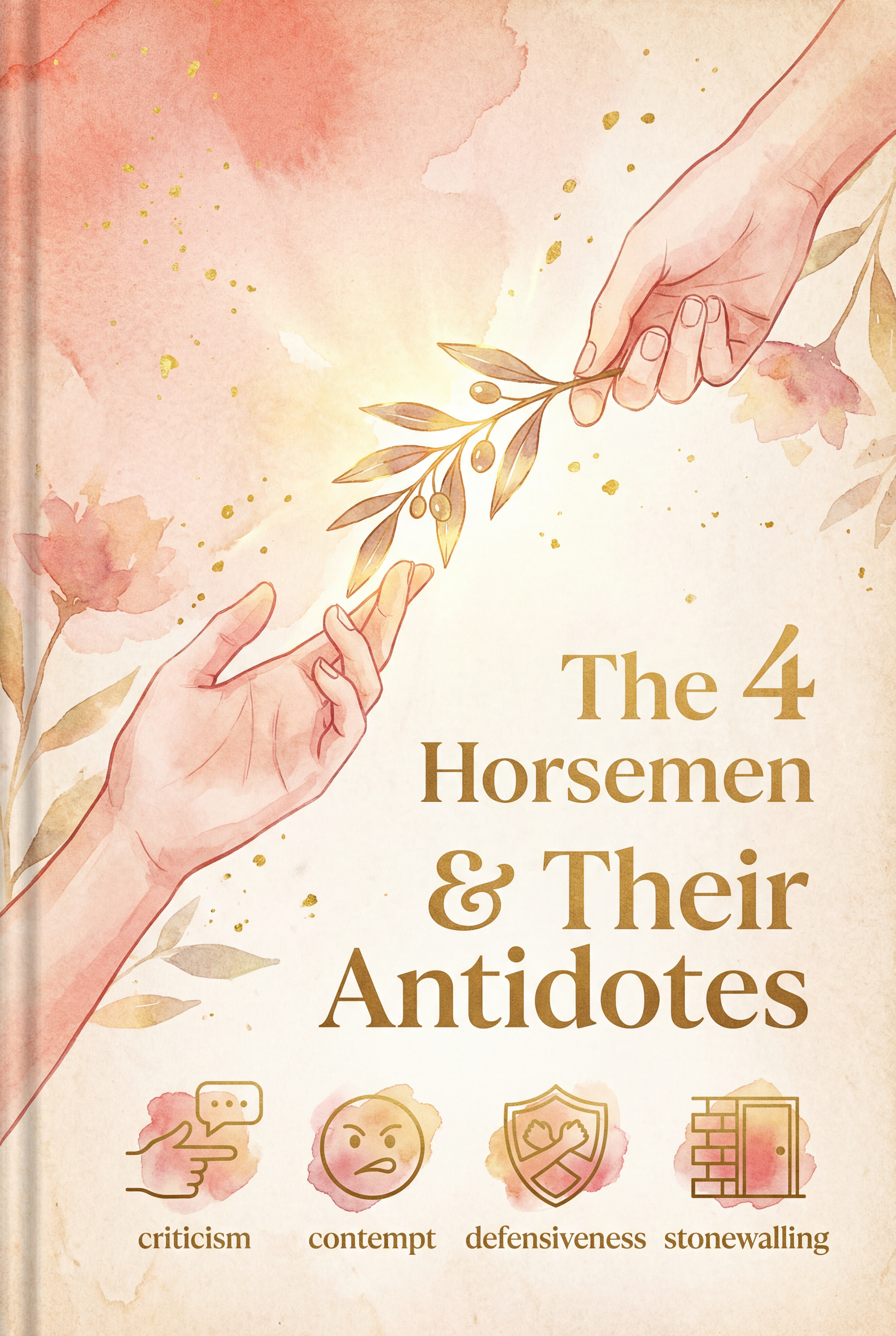
You're stuck in a predictable cycle. Researcher John Gottman calls the destructive patterns "The Four Horsemen":
- Criticism: Attacking character, not behavior ("You always..." "You never...")
- Contempt: Disgust, eye-rolling, mockery (the #1 predictor of divorce)
- Defensiveness: Making excuses, counter-attacking
- Stonewalling: Shutting down, silent treatment
The good news: Each one has an antidote you can learn.

B Do this today
Identify YOUR pattern
Step 1: Think about your last few fights. Which of the Four Horsemen do YOU do most?
Step 2: Be honest. We all do at least one. (Criticism is most common.)
Step 3: For the rest of today, catch yourself before you do it. Just notice when you're about to.
Why this works: You can only change your own behavior. When you change, the cycle breaks because your partner has nothing to react to.
C This week's practice: The antidotes
Replace each Horseman with its antidote:
Criticism → Gentle startup
Instead of "You never listen," say "I feel unheard when I'm talking and you're on your phone. Can we put phones away during dinner?"
Contempt → Describe without judgment
Instead of eye-rolling, describe how YOU feel about the SITUATION (not your partner's character).
Defensiveness → Take responsibility
Instead of excuses, find SOME part you can own. "You're right, I did forget to call. I should have set a reminder."
Stonewalling → Take a break properly
Instead of silent treatment, say "I'm flooded and need 20 minutes. I'll come back and we'll continue."
D Tools that help
Couples Journal (Shared)
When conversations get too heated, write to each other instead. Writing slows down your brain and prevents flooding.
Cooperative Board Games
Games like Pandemic or Codenames Duet where you work together against the game. Practice being on the same team in a low-stakes way.
"The Seven Principles for Making Marriage Work"
John Gottman's book explaining the research behind the Four Horsemen and how to defeat them.
What's next?
Practice the antidotes for two weeks. Focus on changing your own behavior first. If the conflict is rooted in deeper issues:
Save These Tips
Relationships Need Ongoing Care
Reading this guide is a great first step. But relationship patterns don't change overnight. Without consistent practice, old habits creep back.
We've built a free tool to help you stay on track: regular tips and reminders delivered to your inbox, tailored to your situation, at your pace. Think of it as a gentle nudge to keep nurturing your connection.
Get Free Relationship Tips100% free. No spam. Unsubscribe anytime.