This is hard.
Recovering from betrayal (infidelity, major lies, broken promises) is some of the hardest relationship work there is. It often requires professional help. This guide gives you a starting framework, but consider working with a therapist trained in infidelity recovery.
A What's happening in your brain
The hurt partner is experiencing something similar to PTSD. Intrusive thoughts, hypervigilance, flashbacks, difficulty sleeping - these are normal trauma responses.
Recovery requires the person who broke trust to tolerate the hurt partner's pain without becoming defensive - for an extended period. This is extremely difficult but necessary.
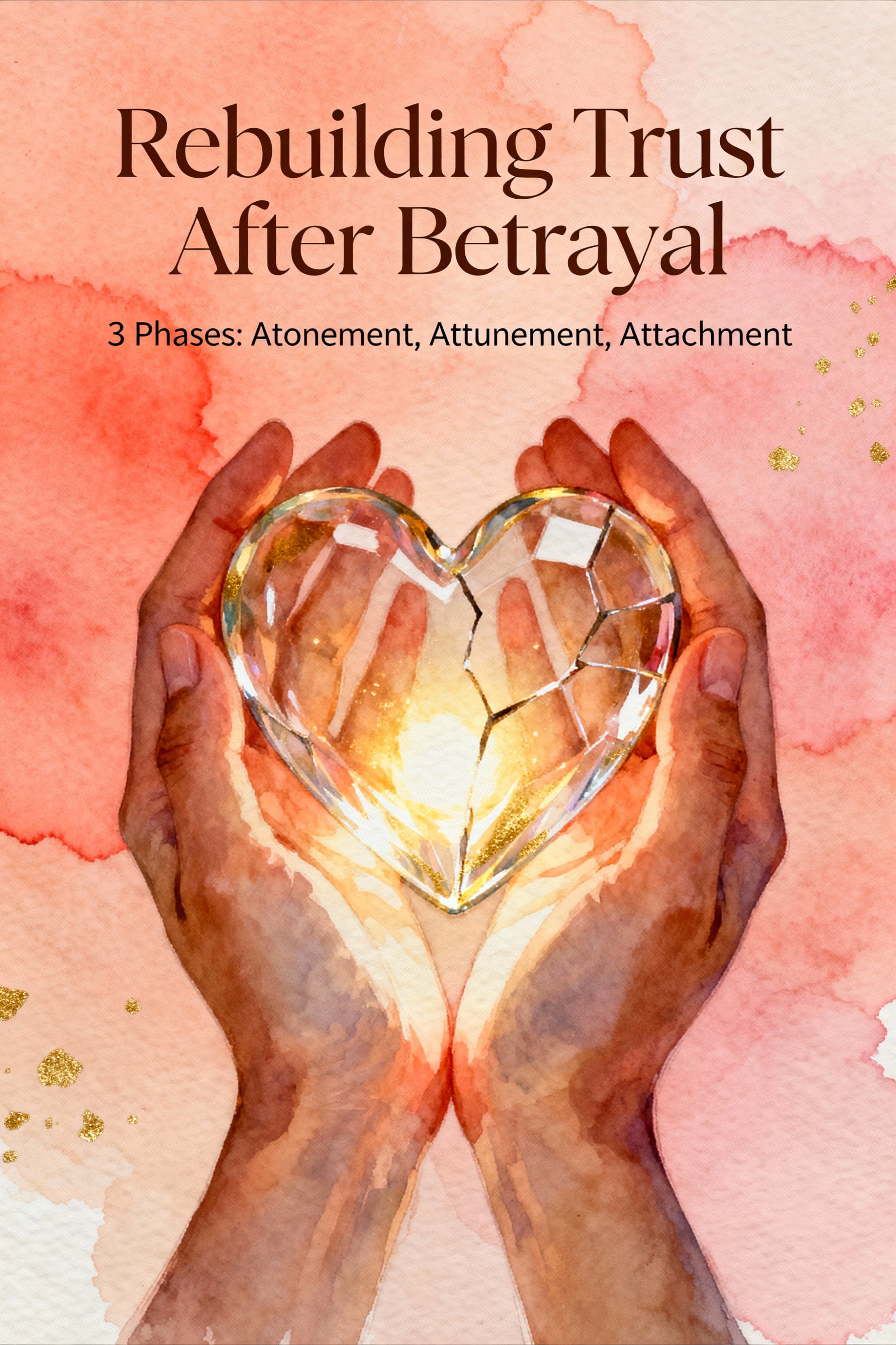
B The three phases of recovery
Atonement
The person who broke trust takes full responsibility. No minimizing ("It didn't mean anything"), no blame-shifting ("If you hadn't been so distant...").
They answer questions honestly. The hurt partner needs to understand what happened to process it.
Attunement
Learning to turn toward each other's pain instead of away. The hurt partner expresses their feelings; the other listens without defending.
This phase can last months or even years. Progress isn't linear.
Attachment
Rebuilding the bond. Creating a new relationship that's stronger because it's finally built on honesty.
Some couples say their relationship is better after recovery than before - because they're truly being honest for the first time.
C Do this today
If you broke the trust:
Say this: "I know I hurt you deeply. I take full responsibility. I'm committed to doing whatever it takes to rebuild your trust, for as long as it takes."
If your trust was broken:
It's okay to not be okay. Your reactions are normal. Decide if you want to try to rebuild - not if you "should," but if you actually want to.
D Essential resources
"How to Help Your Spouse Heal from Your Affair"
By Linda J. MacDonald. Essential reading for the person who broke trust. Clear, direct guidance on what the hurt partner needs.
Gottman-trained or EFT therapist
Seriously consider professional help. Infidelity recovery is one of the hardest things to do without guidance.
"After the Affair" by Janis Spring
For both partners. Helps understand what happened and whether/how to move forward.
What's next?
If you're both committed to trying, start with Phase 1 (Atonement). Get the book and consider finding a therapist. If you're not sure the relationship can survive:
Save These Tips
Relationships Need Ongoing Care
Reading this guide is a great first step. But relationship patterns don't change overnight. Without consistent practice, old habits creep back.
We've built a free tool to help you stay on track: regular tips and reminders delivered to your inbox, tailored to your situation, at your pace. Think of it as a gentle nudge to keep nurturing your connection.
Get Free Relationship Tips100% free. No spam. Unsubscribe anytime.