"We've lost our connection"
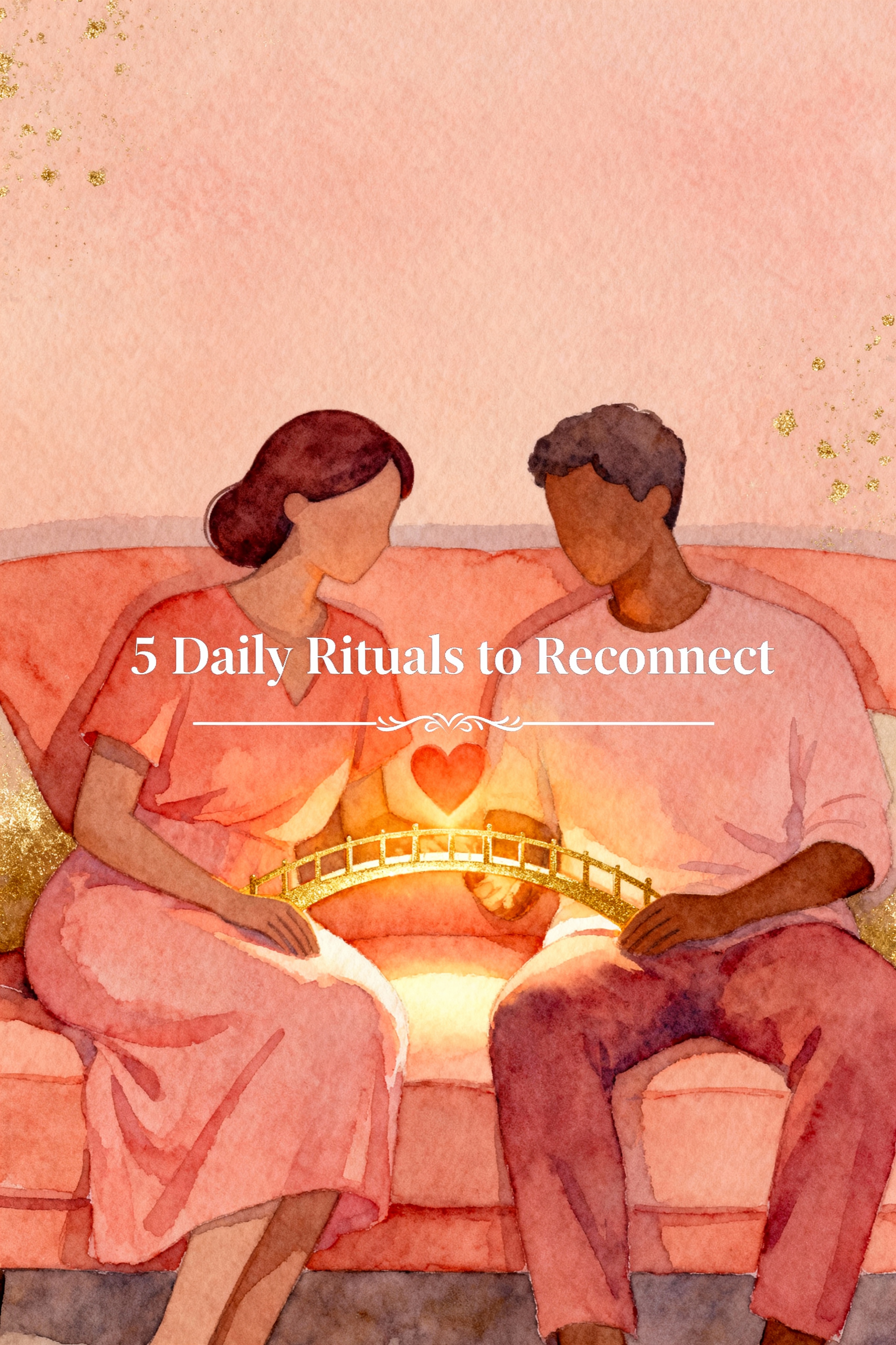
Here's your step-by-step plan to rebuild emotional intimacy and stop feeling like roommates
A Why this is happening
Connection doesn't fade because you stopped loving each other. It fades because life crowds it out. Work, kids, responsibilities - they all demand attention. Your relationship becomes something you maintain rather than nurture.
When you first fell in love, your brain was flooding with dopamine every time you saw your partner. They meant excitement. Over time, that chemical rush naturally fades. Your partner becomes associated with routine, bills, and responsibilities.
Dr. John Gottman's research shows that couples who stay deeply connected do something specific: they consistently make "bids" for connection and respond to each other's bids. A bid is any attempt to get your partner's attention, affection, or support.
When bids go unanswered repeatedly, partners stop making them. The connection slowly starves, and you start feeling more like roommates than lovers.

B Do this today
The 6-Second Kiss + Turn Toward Bids
Part 1 - The 6-Second Kiss:
Find your partner right now (or when they get home). Tell them: "I want to try something. Can we kiss for 6 seconds?" Not a peck - a real kiss, lasting at least 6 seconds. Do this every single day.
Part 2 - Notice the Bids:
For the next 24 hours, notice when your partner tries to get your attention. "Look at this." "How was your day?" "Can you help me with this?" These are bids.
Stop what you're doing and respond. Put down your phone. Make eye contact. Give them your full attention, even for just 30 seconds.
Why this works: 6 seconds is the threshold for releasing oxytocin (bonding hormone) and reducing cortisol (stress hormone). Gottman found that couples who stay together "turn toward" each other's bids 86% of the time. Couples who divorce? Only 33%.
C This week's practice: Daily Connection Ritual
Schedule 20-30 minutes of daily connection time. This combines intentional conversation with physical closeness:
1. Phones in another room
Not on silent. Not face-down. In another room entirely.
2. The Stress-Reducing Conversation
Talk about external stress only - work problems, annoying traffic, that weird thing your coworker said. NOT relationship issues. When your partner talks, your only job is to understand and support them against the external world. Don't try to fix anything - just listen and say things like "That sounds frustrating" or "What a jerk!"
3. Use conversation starters
"What's something you're looking forward to?" "What's been on your mind lately?" "What made you smile today?"
4. Physical touch
Hold hands, sit close, or cuddle while talking. Physical proximity releases oxytocin and strengthens bonding.
D Tools that help
The Adventure Challenge (Book)
Scratch-off date ideas that force novelty. You don't know what the activity is until you commit. Research shows that novel experiences together trigger dopamine and create stronger bonds than routine activities - rewiring your brain's association with your partner.
Eight Dates by John & Julie Gottman
Eight conversation-focused dates designed by relationship researchers. Each explores a different area of your relationship: trust, conflict, sex, money, family, fun, growth, and dreams.
Gottman Card Decks / Love Maps (App)
Free app with conversation starters, appreciation prompts, and questions to deepen your understanding of each other's inner world. "What's their biggest dream?" "What are they worried about right now?"
Weekly Date Night + Novel Activity
Put it on the calendar. Alternate who plans. Focus on activities that require interaction, not passive entertainment like movies. Do something NEW together every week - take a class, visit somewhere you've never been, try a new restaurant.
What's next?
Practice the 6-second kiss, turn toward bids, and daily connection time for one week. Notice if you feel closer. If something else is blocking connection, you might also be dealing with:
Save These Tips

Relationships Need Ongoing Care
Reading this guide is a great first step. But relationship patterns don't change overnight. Without consistent practice, old habits creep back.
We've built a free tool to help you stay on track: regular tips and reminders delivered to your inbox, tailored to your situation, at your pace. Think of it as a gentle nudge to keep nurturing your connection.
Get Free Relationship Tips100% free. No spam. Unsubscribe anytime.