You love your partner deeply. You can't imagine life without them. Yet somehow, you find yourselves arguing almost every day—over dishes, money, how they loaded the dishwasher, or whether they really listened to what you said earlier.
If this sounds familiar, take a deep breath. You're not broken, and your relationship isn't doomed.
According to research, approximately 30% of couples report arguing at least once a week, and many of these couples describe themselves as deeply in love. The problem isn't that you're fighting—it's how you're fighting and what patterns you've fallen into that might be causing damage.
Why Loving Couples Still Fight
Love and conflict aren't mutually exclusive. In fact, the very things that make us care so deeply about our partners can also create friction.
When you're invested in a relationship, the stakes feel higher. Small disappointments can feel like major betrayals because they come from someone whose opinion and actions matter profoundly to you. A forgotten anniversary hurts more than a stranger's rudeness because it's tied to your sense of being valued by the person you've chosen.
Additionally, living with another person means constantly negotiating preferences, habits, and needs. You might be a morning person who thrives on structure while your partner is spontaneous and stays up late. Neither approach is wrong, but they can create daily friction points.
The intimacy of a relationship also means you see each other at your worst. Your partner witnesses your stress, fatigue, and vulnerabilities in ways that friends and coworkers never do. This closeness, while beautiful, also means you're more likely to snap at each other during difficult moments.
The Real Issue: Not Fighting, But How You Fight
Dr. John Gottman, one of the world's leading relationship researchers, spent decades studying thousands of couples. His findings revealed something crucial: it's not whether couples fight that predicts divorce, but how they fight.
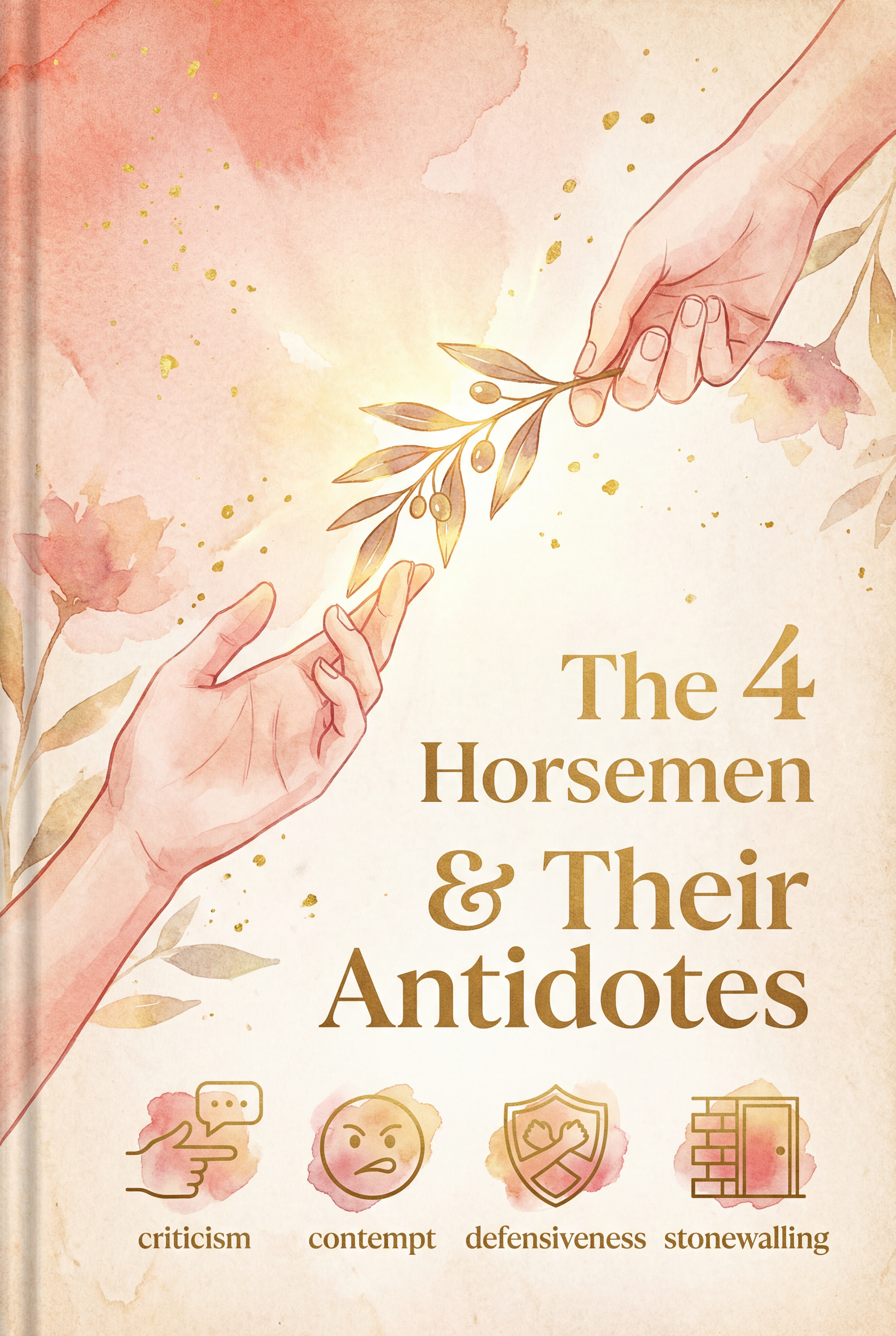
Gottman identified what he calls the "Four Horsemen of the Apocalypse"—four communication patterns that, when present in a relationship, are strong predictors of eventual separation.
The Four Horsemen Warning Signs
1. Criticism
Criticism goes beyond a specific complaint to attack your partner's character. Instead of saying "I felt hurt when you didn't call," criticism sounds like "You never think about anyone but yourself. You're so selfish."
Notice the difference? One addresses a behavior; the other condemns a person.
2. Contempt
Contempt is the most toxic of the four horsemen. It involves treating your partner with disrespect, mockery, or disgust—eye-rolling, sneering, name-calling, or hostile humor.
When contempt enters a relationship, you're no longer on the same team. You've positioned yourself as superior and your partner as beneath you. This pattern is the single greatest predictor of divorce.
3. Defensiveness
Defensiveness is essentially saying "the problem isn't me, it's you." It involves denying responsibility, making excuses, or meeting your partner's complaint with a counter-complaint.
While defensiveness feels protective in the moment, it prevents you from hearing your partner's concerns and working together toward solutions.
4. Stonewalling
Stonewalling happens when one partner withdraws from the interaction, shutting down emotionally and refusing to engage. This often occurs when someone feels overwhelmed, but to the other partner, it feels like abandonment or rejection.
If you recognize these patterns in your relationship, don't panic. Awareness is the first step toward change, and these patterns can be unlearned with intentional effort.
Understanding Your Fight Patterns
Most couples don't fight about everything—they fight about the same few things repeatedly. Understanding your specific patterns is essential to breaking the cycle.
Start by tracking your arguments for a week or two. After each fight, write down what triggered it, what you were really fighting about (which might be different from the surface topic), and how it ended.
You'll likely notice patterns emerging. Maybe fights always start when one of you is tired. Maybe certain topics (money, in-laws, household responsibilities) consistently spark conflict. Maybe you fight more on Sunday evenings or after social events.
These patterns reveal important information about your relationship's pressure points. A fight about taking out the trash might actually be about feeling unappreciated. An argument about plans with friends might really be about needing more quality time together.
Common Fight Triggers: Why the Same Fights Keep Happening
Recurring fights usually happen because the underlying issue never gets resolved—you're just treating symptoms, not the disease.
Feeling Unheard or Dismissed
When people don't feel heard, they often escalate their emotions to get their partner's attention. This creates a cycle where one person gets louder and the other shuts down, which makes the first person even more desperate to be heard.
Different Conflict Styles
Some people need to talk things through immediately, while others need time to process before discussing difficult topics. When these styles clash, it can feel like your partner doesn't care (when they withdraw) or is attacking you (when they want to talk right now).
Unmet Expectations
Many fights stem from expectations that were never explicitly discussed. You might expect your partner to initiate date nights because that's what your parents did, while they expect you to handle it because you're "the planner." Neither is wrong, but the unspoken expectation creates disappointment.
Score-Keeping and Resentment
When small frustrations aren't addressed, they accumulate. Eventually, something minor triggers a disproportionate reaction because it's the last straw on a pile of unprocessed resentments.
External Stress
Work pressure, financial strain, family issues, or health concerns can shorten your fuse with your partner. They become a safe target for frustrations that actually originate elsewhere.
How to Stop a Fight Before It Escalates
Prevention is more effective than damage control. Here are strategies to interrupt a conflict before it spirals.
Recognize Your Physical Warning Signs
Your body tells you when you're getting flooded with emotion—heart racing, jaw clenching, face flushing, or that hot feeling in your chest. Learn to recognize these signs in yourself.
When you notice them, it's time to pause. Your rational brain is going offline, and anything you say now will likely escalate things.
Use the Timeout Effectively
When emotions run high, take a break. But do it respectfully: "I'm feeling overwhelmed and need 20 minutes to calm down. Can we revisit this then?"
This is different from stonewalling because you're communicating your need and committing to return. During the break, don't rehearse your arguments—do something genuinely calming like going for a walk or practicing deep breathing.
Name the Pattern
Sometimes simply identifying what's happening can break the cycle. "Hey, I think we're doing that thing where I feel criticized and get defensive, and then you feel unheard. Can we start over?"
This shifts you from opponents to teammates working against a common problem.
Soften Your Startup
How you begin a conversation largely determines where it ends up. Gottman's research shows that you can predict the outcome of a conversation with 96% accuracy based on the first three minutes.
Instead of "You never help around the house," try "I'm feeling overwhelmed with housework and need to problem-solve with you about it."
Repair Attempts That Actually Work
Even the healthiest couples mess up. What separates successful relationships is the ability to make effective repair attempts—actions that de-escalate conflict and restore connection.
Simple Repair Phrases
Sometimes all you need is a simple phrase to reset:
- "Can we start over?"
- "That came out wrong. What I meant was..."
- "I'm sorry, I'm just stressed and taking it out on you."
- "I can see this matters to you. Help me understand."
- "You're right about that part."
Physical Repair Attempts
Non-verbal repairs can be powerful: reaching for your partner's hand, offering a hug (if they're receptive), or even making a silly face to break the tension.
The key is reading whether your partner is ready for this. If they're still upset, a joke might feel dismissive. Use your judgment.
Taking Responsibility
One of the most effective repairs is genuine ownership: "I was harsh. I apologize." Not "I'm sorry, but you..." Just a clean acknowledgment of your part.
This isn't about taking blame for the entire conflict—it's about acknowledging your contribution to the dynamic.
The Relationship Narrative
Remind yourselves of your bigger story. "We're having a hard moment, but I love you and I know we can work through this."
This perspective helps you remember that one fight doesn't define your relationship.
The 24-Hour Rule for Difficult Topics
Not every conversation should happen in the moment. Some topics are too important, too complex, or too emotionally loaded to tackle when you're tired, hungry, or already frustrated.
The 24-hour rule is simple: if something bothers you, you have 24 hours to bring it up. But you get to choose when during that window, ideally when you're both in a good headspace.
How to Implement the Rule
When something upsets you, pause and ask yourself: "Does this need to be discussed right now, or can it wait until we're both in a better place?"
If it can wait, schedule the conversation: "Something's been on my mind about our budget. Can we talk about it tomorrow evening after dinner?"
This accomplishes several things. It prevents ambushes when your partner is unprepared. It gives you time to organize your thoughts. And it signals that the topic is important enough to deserve dedicated attention.
When to Break the Rule
Some things genuinely need immediate discussion—safety issues, time-sensitive decisions, or situations where waiting would cause more harm. Use discernment.
When Fighting Becomes Unhealthy
While conflict is normal, certain warning signs indicate your fighting has crossed into unhealthy territory.
Red Flags to Watch For
- Fights that turn physical: Any physical aggression—pushing, grabbing, throwing things—is unacceptable and requires immediate professional help or separation for safety.
- Constant walking on eggshells: If you're constantly monitoring your words and actions to avoid setting off your partner, that's a sign of an unhealthy dynamic.
- No resolution ever: If fights end without resolution and the same issues keep resurfacing with no progress, you're stuck in a destructive pattern.
- Contempt and disgust: If you or your partner regularly express disgust, mockery, or contempt, your foundation is eroding.
- Fighting in front of children: Regular, intense conflicts witnessed by children can cause lasting harm. If you can't control when and how you fight, seek help.
- One-sided apologies: If one person always apologizes while the other never takes responsibility, there's a power imbalance that needs addressing.
The Difference Between a Rough Patch and a Troubled Relationship
Every relationship has difficult seasons. But if you've been in a "rough patch" for months or years, it's no longer a patch—it's the pattern.
Ask yourself: Are we both committed to improving things? Are we making progress, even slowly? Do I still like this person, not just love them?
If the answer to these questions is no, it's time to consider professional help.
Getting Back on Track: Next Steps
If you recognize your relationship in this article, here's what to do next.
Start Small
Don't try to overhaul your entire relationship dynamic overnight. Pick one pattern to work on—maybe it's reducing criticism by making specific complaints instead of character attacks.
Have a Meta-Conversation
Talk about how you talk. "I noticed we fight about the same things repeatedly. Can we figure out a better way to handle disagreements?"
This conversation itself might be difficult, but it's essential. Use it to establish ground rules for fighting fair.
Learn Together
Read books on relationship communication together, like Gottman's "The Seven Principles for Making Marriage Work" or Sue Johnson's "Hold Me Tight." Having a shared framework helps you both work toward the same goals.
Consider Professional Help
There's no shame in couples therapy. In fact, seeing a therapist before things get desperate is one of the smartest investments you can make in your relationship.
A skilled therapist can identify patterns you're too close to see and teach you specific skills for your unique dynamic.
Practice During Calm Moments
Don't wait for a fight to try new communication strategies. Practice active listening, making repair attempts, and expressing needs clearly during low-stakes conversations.
This builds the muscle memory you'll need when emotions run high.
You Can Change the Pattern
Here's the truth: fighting doesn't mean you're incompatible or that your relationship is failing. Many couples who fight regularly have strong, lasting relationships—because they've learned to fight productively.
The key is recognizing destructive patterns and choosing to change them. It takes effort, humility, and practice. You'll mess up. You'll fall back into old habits. That's normal.
What matters is the overall trajectory. Are you learning from conflicts? Are you treating each other with more respect over time? Are you both committed to growth?
If so, you're not just fighting—you're building a stronger relationship through the challenges.
Ready to Transform Your Communication?
If constant fighting is wearing down your relationship, you don't have to figure this out alone. Our comprehensive Communication Guide offers deeper insights, practical exercises, and step-by-step strategies for building healthier conflict patterns.
You'll learn how to express difficult feelings without triggering defensiveness, how to really listen to your partner's concerns, and how to turn conflicts into opportunities for deeper connection.
Your relationship is worth the effort. Take the first step today.